Tollywood's Subtitle Craft: How Linguistic Nuances Shape Global Access to Regional Film Narratives
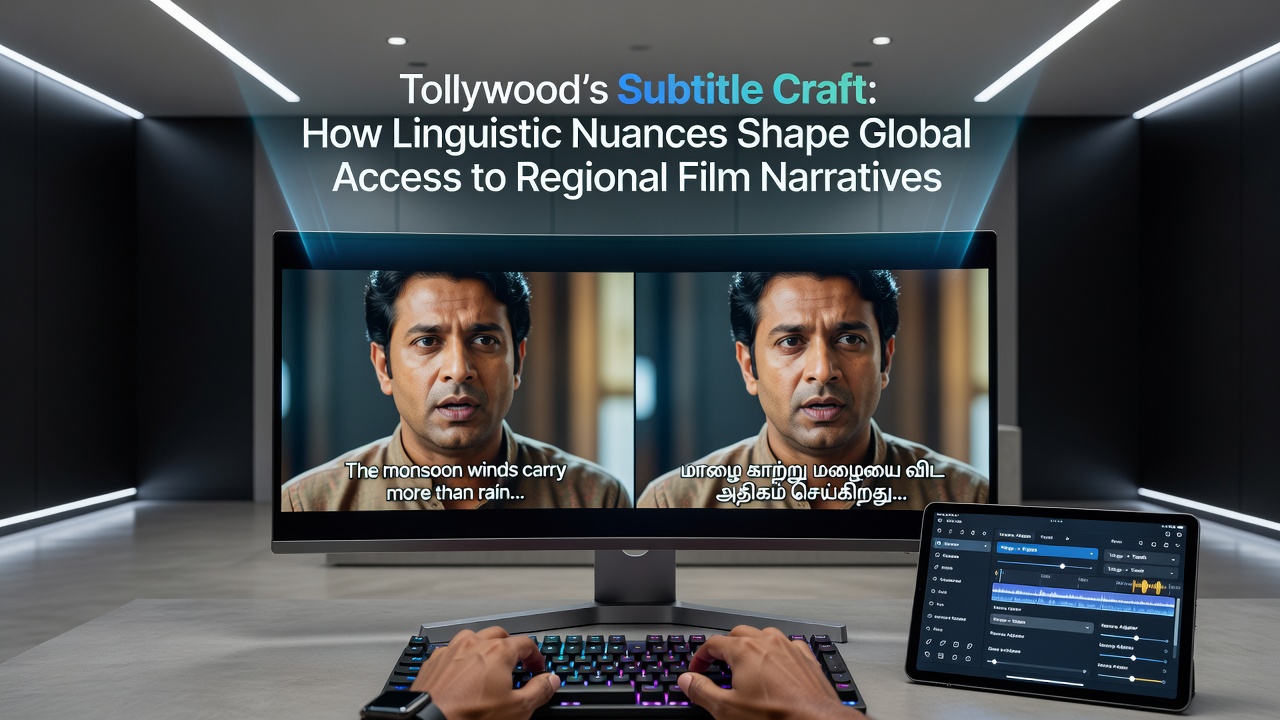
Telugu cinema, known widely as Tollywood, continues to expand its reach beyond regional boundaries through careful subtitle adaptations that preserve cultural and linguistic elements unique to the language. Subtitlers face the task of conveying dialects, idioms, and contextual references embedded in dialogues, which often carry layers of meaning tied to Andhra Pradesh and Telangana traditions, while ensuring these elements remain accessible to viewers in diverse markets.
Navigating Telugu Linguistic Specifics in Translation
Telugu features distinct dialects that vary between coastal, Rayalaseema, and Telangana regions, and each carries vocabulary differences along with tonal shifts that reflect social hierarchies and historical contexts. Subtitlers must decide whether to retain regional flavor through explanatory phrasing or adapt terms into neutral expressions that avoid alienating audiences unfamiliar with these variations, and this choice directly influences how narratives about family dynamics, rural life, or urban migration land with international viewers. Researchers at institutions across Asia have documented cases where literal translations of proverbs tied to agricultural cycles or festival customs led to confusion, prompting teams to incorporate brief contextual cues within subtitle timing limits.
Data from streaming analytics shows that films released after 2024 with refined subtitle layers experienced higher completion rates among non-Indian audiences, particularly when translators balanced fidelity to original intent with readability. Observers note that June 2026 marked a period when several Tollywood productions incorporated AI-assisted tools to flag potential nuance gaps early in post-production, allowing human editors to focus on cultural resonance rather than basic accuracy checks.
Technical Approaches to Subtitle Adaptation
Professionals in the field employ strategies such as condensation, where lengthy dialogues are shortened without losing core intent, alongside cultural substitution that replaces specific references with equivalents familiar to target regions. For instance, a reference to a local harvest festival might appear alongside a short descriptor that maintains narrative flow, while avoiding footnotes that disrupt viewing pace. Industry reports from the European Audiovisual Observatory highlight how these methods have helped regional Indian films achieve broader distribution deals in Europe and North America, where subtitle quality often determines platform recommendations.
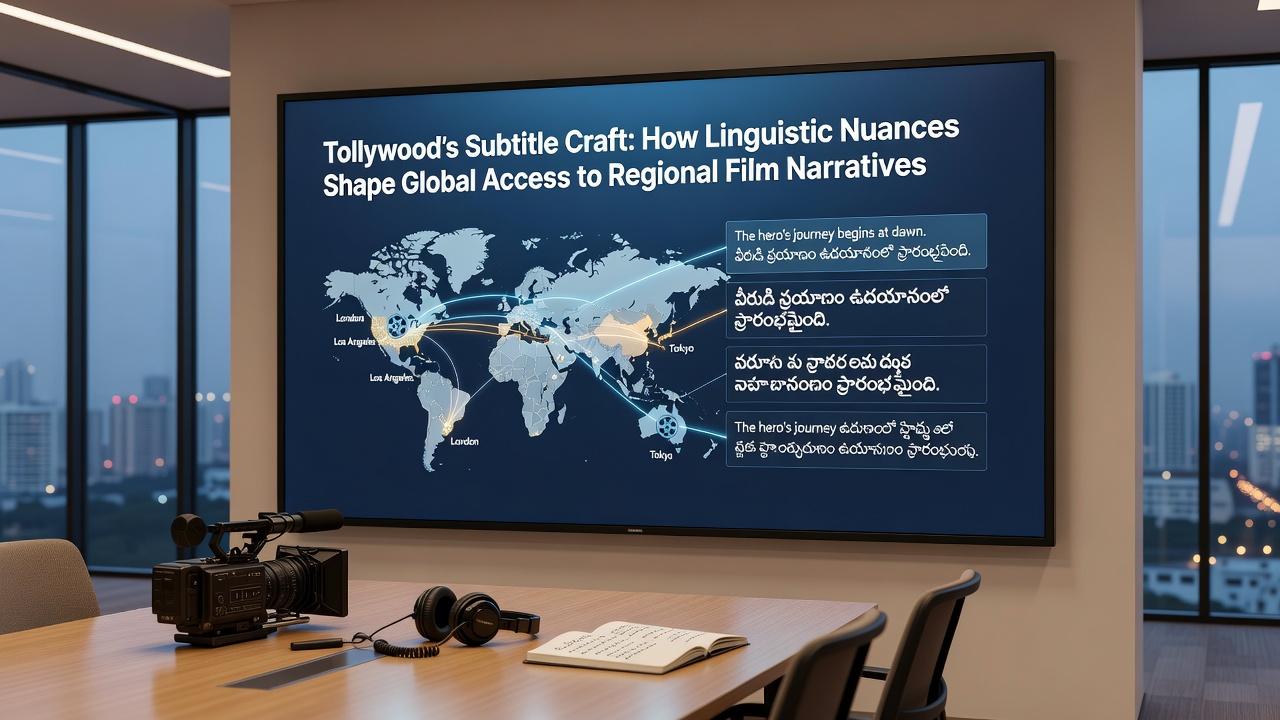
Timing plays an equally critical role, as Telugu films frequently feature rapid exchanges laced with humor or sarcasm that require precise synchronization to land effectively. Teams coordinate with directors to adjust pacing during dubbing sessions, ensuring that emotional beats align across languages. Those who've examined subtitle databases find that consistent application of these techniques correlates with improved retention metrics on platforms serving audiences in Australia and Canada.
Influence on Worldwide Narrative Reach
Global access expands when subtitles successfully bridge gaps between Telugu-specific expressions and universal themes of ambition, conflict, and relationships. A study conducted by University of Melbourne scholars examined viewer feedback on several 2025 releases and found that nuanced handling of honorifics and kinship terms helped maintain character depth, which in turn supported stronger emotional engagement from overseas markets. Platforms report that such adaptations contribute to increased subtitle-enabled views, with figures revealing steady growth in regions where English remains the primary interface language.
Yet challenges persist around slang and evolving urban dialects that emerge in contemporary scripts. Translators collaborate with linguists to update glossaries regularly, incorporating feedback loops from focus groups in multiple countries. This iterative process has become standard practice, allowing Tollywood productions to maintain authenticity while meeting technical standards set by international distributors.
Conclusion
Subtitle craftsmanship in Tollywood productions demonstrates how attention to linguistic details supports wider distribution of regional stories. As streaming services continue to prioritize multilingual access, the methods developed for handling Telugu nuances offer models for other industries facing similar translation demands, and ongoing refinements through 2026 indicate sustained investment in these practices.